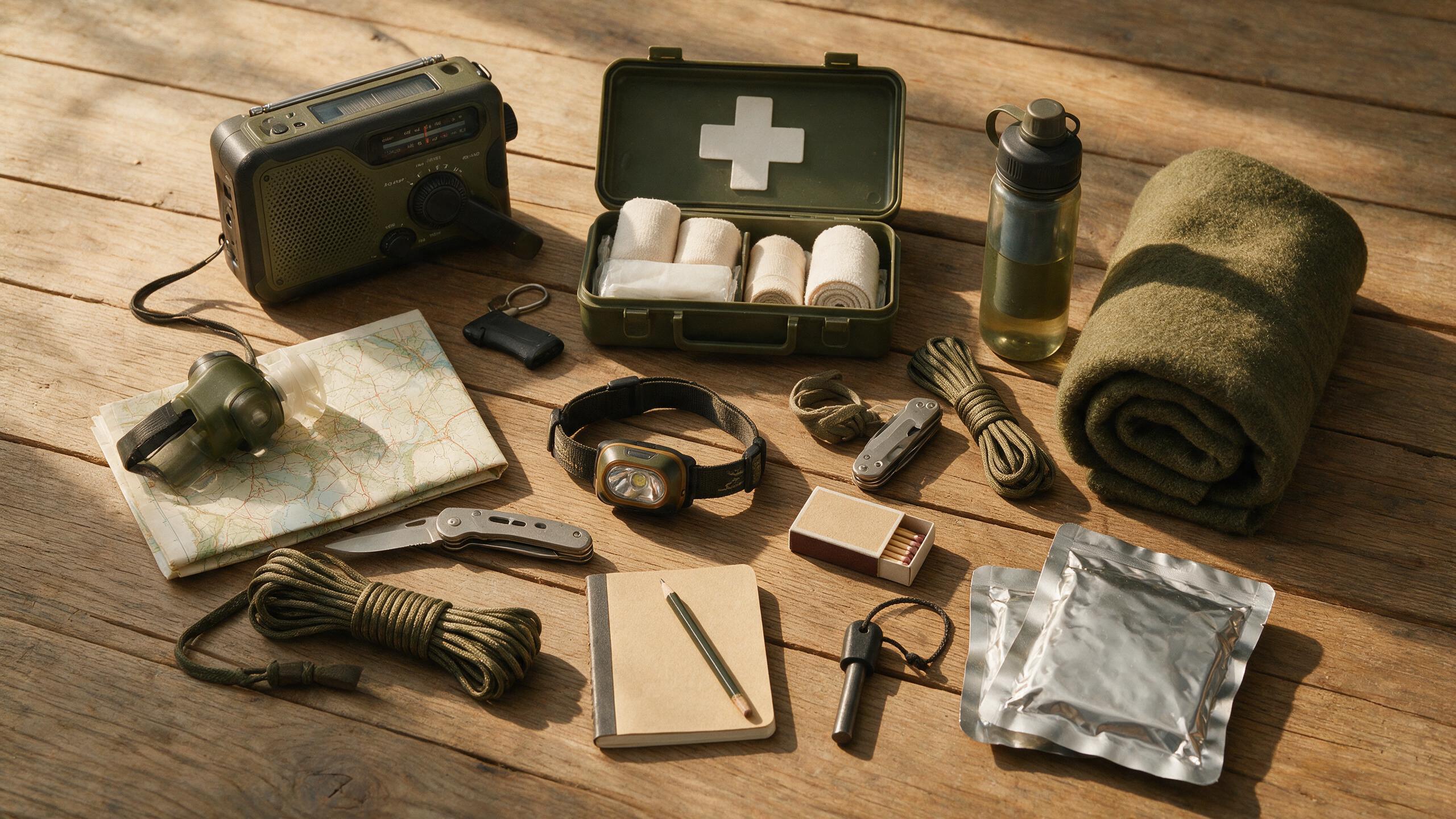
Power cuts · Storms · Water off · Roadside · Illness
Most emergencies are not the end of the world. They're three days without power, a boil-water notice, a flooded road, a stomach bug that goes through the whole house. Survival Life Tips is a plain-English field library for exactly those — the things that actually happen, written so you can do them tonight.
Instant digital access. Readable on a phone. Printable for the kitchen drawer.
The real problem
They freeze because it's dark, the phone is at 4%, nobody knows where the torch is, and the one person who knew how to shut off the water isn't home.
Preparedness content has a habit of skipping all of that. It sells you a bucket of freeze-dried food and a knife the size of your forearm, and it quietly assumes the emergency will be the interesting kind. Meanwhile the actual events — the outage, the burst pipe, the storm warning, the car that won't start on a cold morning — get handled badly by capable adults who simply never had to think about it in advance.
That gap isn't a shopping problem. It's a knowing-what-to-do-first problem, and it closes surprisingly fast once somebody writes the steps down in order.
The shift
Everything in this library is built around one ordering rule: handle the likely before the dramatic. A three-day power cut is thousands of times more likely than the scenario most survival content is written for — and, conveniently, the skills that carry you through the boring version are the same ones that carry you through the serious version.
Light. Water. Warmth. Food you can actually cook. Information when the internet is gone. A plan for where everyone meets. Get those right for a weekend outage and you've already built the foundation for anything bigger, without spending a fortune or turning your garage into a warehouse.
That's the whole approach. Ordinary first. In order. Written down.
What's inside
Every entry is a single page: what the situation looks like, what to do first, what to do next, and what people usually get wrong. No chapter you have to read twice.
The first ten minutes. Keeping a fridge cold for three days. Lighting a house safely without candles everywhere. Charging a phone when there's no socket. Knowing when to open the freezer and when to leave it shut.
How much a household actually needs. Filling the bath and why timing matters. Boiling, filtering and chemical treatment compared honestly. What to do the moment a boil-water notice lands.
Heating one room instead of a house. Layering that works. Frozen-pipe prevention and what to do if it's already happened. Getting through a heatwave when the air conditioning is off.
Building a two-week shelf from a normal supermarket. Rotating it so nothing is wasted. Cooking without power, safely and indoors. Judging what in the fridge is still fine and what isn't.
A home kit that gets used, not admired. Bleeding, burns, breaks, allergic reactions. Managing a household illness so it doesn't take everyone. Keeping prescriptions from becoming an emergency of their own.
Getting real information when the internet is down. The one-page family plan and where each copy lives. A meeting point, a paper contact list, and the rule that everybody knows.
The shortlist
There's a shopping list in the library, and it is deliberately short. Ordinary items, from ordinary shops, chosen because they earn their place in a cupboard — not because they photograph well.
Each item comes with the one thing most people don't do with it: test it before you need it, store it where you'll reach it in the dark, and check it on a date you'll actually remember.
No brand deals, no affiliate padding, no gear you'll use once and resent.
What this looks like in practice
These are illustrations of how the material is meant to be used — not accounts of real customers, and not outcomes anyone is promising you.
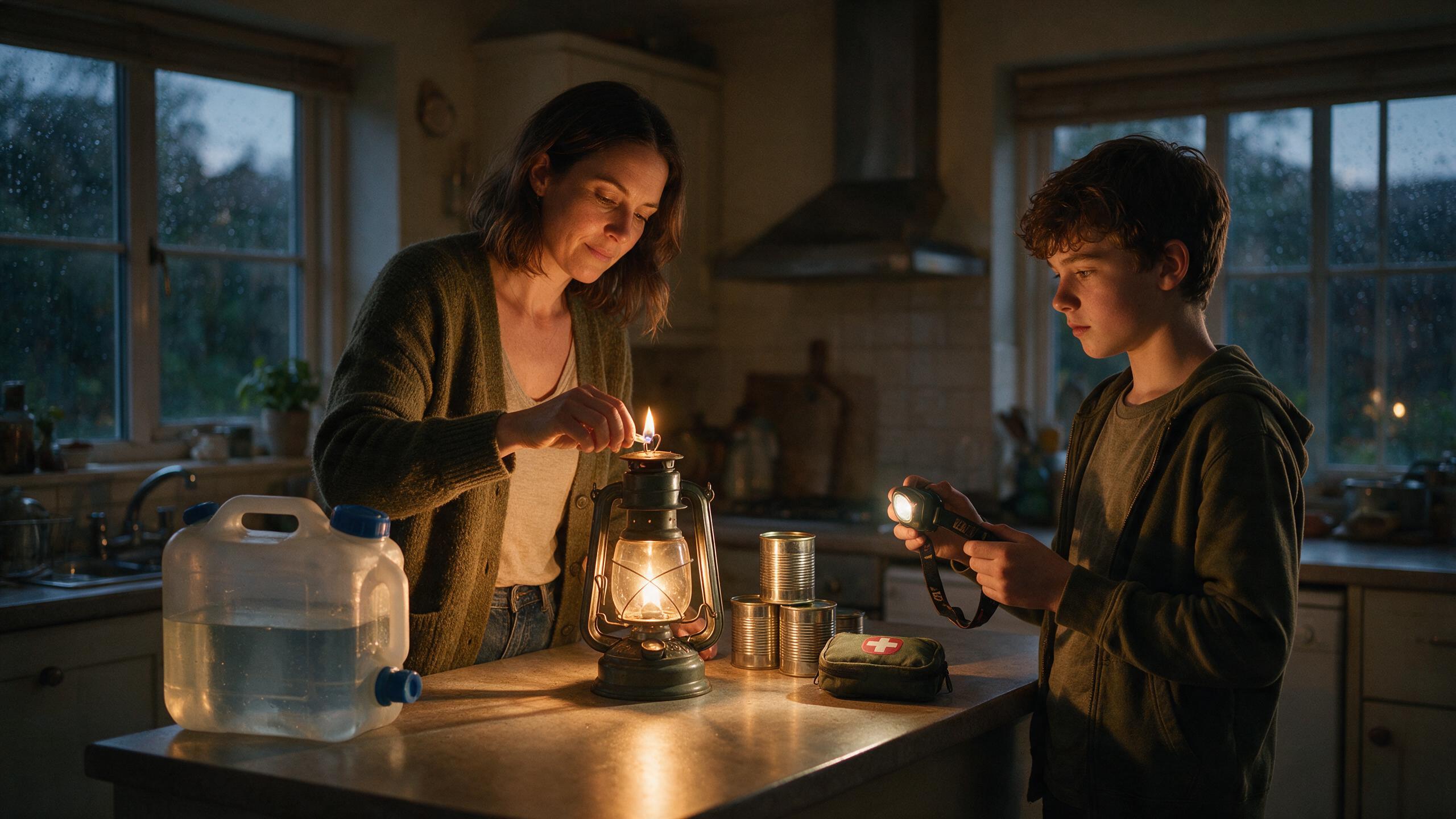
Storm takes the power out. Instead of hunting for a torch, you go to the drawer you set up in section one, get lanterns on, and leave the freezer shut. The house stays calm because somebody already knew the order of operations.
A boil-water notice goes out across town. You've read the page. You know what "boil" actually means here, which taps are affected, what's safe for the dog, and you're not standing in a queue at the shop at ten past nine.
Someone comes home unwell and it's going round. You isolate the sensible things, you've got what you need in the cupboard, and you don't turn one sick person into a household of four.
Honest fit
The point of all of it
The households that handle this well aren't braver. They've just removed the decisions. Where the light is. Who fills the containers. What happens if the phones don't work. Which neighbour gets checked on.
Decide it once, on an ordinary evening, and you never have to decide it in the dark with a child asking questions.
Everything you're getting
| The Survival Life Tips Field Library 52 one-page skills across six sections | $149 |
| The Weekend Kit Shortlist What to buy, where to store it, when to check it | $59 |
| The One-Page Household Plan Fill-in template — meeting point, contacts, shut-offs | $49 |
| Printable Cupboard Checklists Outage, water, storm, illness — one card each | $39 |
| The Rotation Calendar So nothing in the cupboard quietly expires | $33 |
| Seasonal Update Pack Winter, storm season and heatwave supplements | $100 |
| Total value | $429 |
Before you decide
No. It's digital, and you get access immediately after ordering. Every part of it is designed to be readable on a phone and printable for a drawer or a cupboard door.
No. The shortlist is deliberately short and built around ordinary supermarket and hardware-shop items. You can start with what's already in the house and fill gaps over a few weeks.
No. It's about outages, storms, water interruptions, roadside trouble and household illness. If a larger event ever happened, the same foundations apply — but that isn't the framing, and it isn't the tone.
Yes. Storage-light options are called out throughout, and the water, light, warmth and plan sections don't assume a garage, a garden or a car.
No. It's general educational material. It doesn't replace your doctor, your local emergency services or your local emergency management authority — and in a real emergency you follow their instructions, not a PDF.
Get instant access
$429 total value
One payment. Instant digital access.
You'll be taken to a secure checkout, then straight to your download page.